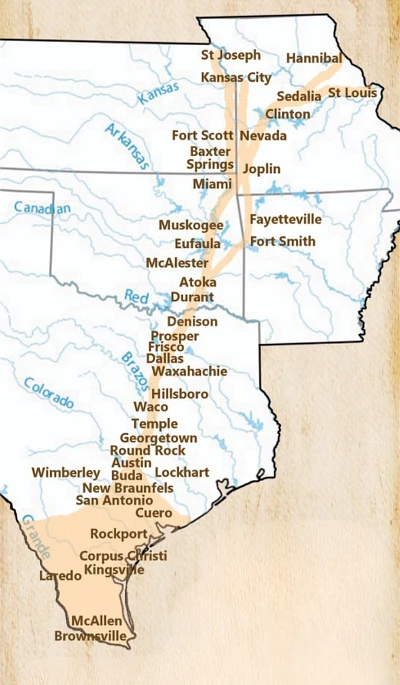
Wild longhorns became a commodity in 1836 when Texas became a country. Drovers reversed southbound Indian and settler trails by driving cattle north on the "Texas Road." Herds gathered south of San Antonio were trailed through Indian Territory to Arkansas, Kansas, and Missouri.
The Civil War halted all Texas cattle trailing north. After the war ended in 1865, northern markets for Texas longhorns exploded, and herds began going up the trail again. Communities along the trail prospered, providing supplies for the northbound crews.
However, tick fever, to which the Texas longhorns were immune but local farm cattle were not, caused problems. Farmers began organizing resistance to prevent the herds from passing through, and pushed for state legislation to protect their animals from the disease. Laws against Texas cattle spreading tick fever and the westward advance of the railroads ended the use of the Shawnee Trail by 1875, as drovers began taking herds via different routes to railheads in Kansas.